
Keratoconus can make even routine activities such as reading, driving, or recognizing faces increasingly difficult. As the cornea becomes thinner and more irregular, patients often experience blurred or distorted vision, glare, halos, and frequent changes in their prescription. Although glasses or conventional soft contact lenses may provide adequate correction in the early stages, they often become less effective as corneal irregularity increases.
Specialty contact lenses offer an important solution for patients whose vision cannot be adequately corrected with conventional eyewear. Rather than simply compensating for nearsightedness or astigmatism, these lenses are designed to create a smoother optical surface over the irregular cornea, allowing light to focus more accurately on the retina. Depending on the lens design and the severity of the condition, specialty lenses can provide substantial improvements in visual clarity, comfort, and everyday functioning. At Miami Contact Lens Institute, we specialize in fitting custom contact lenses for patients with keratoconus and other irregular corneal conditions. Understanding the different lens options can help you make informed decisions about your vision and long-term eye care.
Understanding Keratoconus and Its Impact on Vision

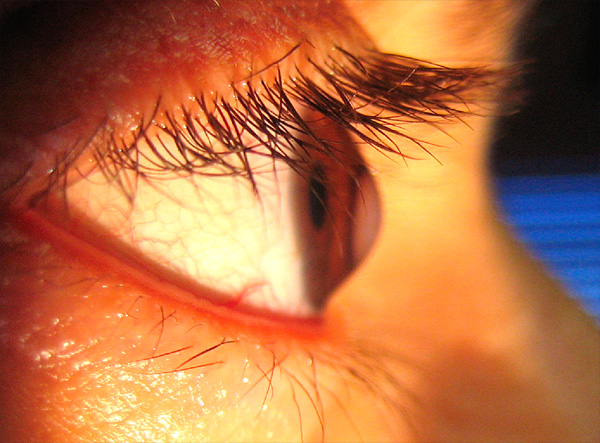
Keratoconus is a progressive corneal disorder characterized by thinning and steepening of the cornea, which gradually develops an irregular, often cone-shaped configuration. Because the cornea is responsible for much of the eye's focusing power, these structural changes can significantly affect the way light enters the eye. As keratoconus progresses, patients may develop increasing amounts of irregular astigmatism and higher-order optical aberrations that cannot be fully corrected with conventional glasses. Symptoms commonly include blurred or distorted vision, ghosting, glare, halos around lights, and difficulty seeing clearly at night. Keratoconus often begins during adolescence or early adulthood, although it can develop or progress at other ages. The rate of progression varies considerably among patients, making regular monitoring with corneal topography or tomography particularly important.
One of the most important aspects of keratoconus management is distinguishing between treatments that improve vision and treatments intended to slow or stop disease progression. Specialty contact lenses provide visual rehabilitation by compensating for corneal irregularity, while corneal collagen cross-linking may be recommended to stabilize the cornea in patients with progressive disease.
Learn more about the diagnosis and management of keratoconus.
Why Regular Soft Contact Lenses May Not Work Well for Keratoconus
Conventional soft contact lenses are designed to conform closely to the shape of the cornea. While this works well for most patients with regular nearsightedness, farsightedness, or astigmatism, it becomes less effective when the corneal surface is significantly irregular. In keratoconus, the cornea develops uneven curvature that creates optical distortions beyond what a standard prescription can correct. Because conventional soft lenses generally follow the underlying corneal shape, they may not adequately neutralize these irregularities, leaving patients with persistent blur, ghosting, or fluctuating vision.
Specialty contact lenses address this problem by providing a more regular optical surface. Rigid gas-permeable and hybrid lenses maintain their optical shape over the cornea, while scleral lenses vault over the corneal surface and create a fluid reservoir that helps neutralize irregular astigmatism. Some patients with mild keratoconus may continue to achieve satisfactory vision with glasses or specially designed soft lenses. However, as corneal irregularity increases, more advanced lens designs may be necessary to achieve optimal visual performance.
Types of Specialty Contact Lenses for Keratoconus

Several specialty contact lens designs are available for patients with keratoconus, each offering different advantages depending on the shape of the cornea, the degree of irregularity, and the patient's individual needs. There is no single lens type that is universally best, and the choice should be guided by a comprehensive examination and specialized fitting evaluation.
Custom Soft Contact Lenses
Custom soft contact lenses are designed specifically for eyes with irregular corneal shapes. Unlike conventional soft lenses, these designs may incorporate increased central thickness, customized optical zones, or other features intended to reduce the visual effects of mild corneal irregularity.
Because they are made from flexible materials, custom soft lenses may feel more familiar to patients who have previously worn conventional soft contact lenses. They can be an appropriate option for selected patients with mild keratoconus who achieve satisfactory vision without requiring a rigid optical surface. However, their ability to neutralize irregular astigmatism is generally more limited than that of rigid or scleral lenses, particularly in more advanced cases.
Rigid Gas-Permeable (RGP) Contact Lenses
Rigid gas-permeable lenses, also known as corneal GP lenses, are made from firm, oxygen-permeable materials that maintain their shape on the eye. By providing a smooth anterior optical surface and a tear layer between the lens and the cornea, these lenses can effectively neutralize irregular astigmatism and improve vision in patients with keratoconus. Corneal GP lenses are often successful in mild to moderate keratoconus, particularly when the corneal shape allows for adequate lens centration and stability. However, because these lenses interact directly with the cornea, some patients may experience lens awareness, discomfort, or difficulty maintaining a stable fit.
For patients with more pronounced corneal irregularity or those who cannot tolerate smaller rigid lenses, other designs may provide greater comfort or stability.
Hybrid Contact Lenses
Hybrid contact lenses combine a rigid gas-permeable center with a surrounding soft lens skirt. The rigid center provides the optical benefits of a GP lens, while the soft peripheral portion is designed to improve comfort and lens stability. Hybrid lenses may be appropriate for patients who need the visual clarity of a rigid lens but have difficulty tolerating conventional corneal GP lenses. They can also be useful in certain cases where improved lens centration or stability is desirable.
The success of hybrid lenses depends on the patient's corneal shape, lens fit, and ocular surface condition. Although they offer advantages for selected patients, they are not necessarily the best option for every stage or presentation of keratoconus.
Scleral Contact Lenses
Scleral contact lenses are large-diameter, rigid gas-permeable lenses designed to vault over the entire cornea and rest on the sclera, the white portion of the eye. Before insertion, the lens is filled with preservative-free sterile saline, creating a fluid reservoir between the lens and the corneal surface. This design allows scleral lenses to neutralize significant corneal irregularity while minimizing direct mechanical interaction with the cornea. Because the lens rests on the less sensitive scleral tissue, many patients find scleral lenses more comfortable and stable than smaller corneal GP lenses.
Scleral lenses are particularly valuable for patients with moderate to advanced keratoconus, highly irregular corneas, corneal scarring, or difficulty tolerating other lens designs. They may also benefit patients with concurrent ocular surface disease, as the fluid reservoir can help maintain hydration of the corneal surface during wear. At Miami Contact Lens Institute, scleral lens fitting is a major focus of our specialty contact lens services. Advanced diagnostic technology and individualized lens designs allow us to address complex corneal and scleral shapes while optimizing vision, comfort, and ocular surface health.
Piggyback Contact Lens Systems
A piggyback contact lens system involves wearing a soft contact lens beneath a corneal rigid gas-permeable lens. The soft lens provides a cushioning layer between the rigid lens and the cornea, while the GP lens supplies the smooth optical surface needed to correct irregular astigmatism. This approach may be useful for patients who achieve excellent vision with corneal GP lenses but experience discomfort or mechanical irritation. However, wearing two lenses requires careful consideration of oxygen transmission, lens compatibility, hygiene, and fitting characteristics.
Piggyback systems can be effective in selected cases, although many patients who previously required this approach may also be candidates for modern scleral or hybrid lens designs.
How Specialty Contact Lenses Improve Vision in Keratoconus
The primary purpose of specialty contact lenses in keratoconus is to improve visual function by compensating for the optical irregularities created by the cornea. Depending on the lens design, these benefits may extend beyond simply improving visual acuity on an eye chart.
Improved Visual Clarity
Keratoconus creates irregular astigmatism and higher-order aberrations that often cannot be fully corrected with conventional glasses. Specialty lenses provide a smoother refractive surface that helps reduce these optical distortions and improve the quality of the image reaching the retina. For many patients, the improvement can be substantial, allowing them to achieve clearer and more functional vision for reading, driving, working, and other daily activities.
Reduced Ghosting, Glare, and Visual Distortion
Patients with keratoconus frequently describe seeing shadows around letters, multiple images, streaks of light, or halos around headlights. These symptoms are often related to irregular corneal optics rather than a simple change in prescription. By reducing the effects of irregular astigmatism, specialty contact lenses can improve image quality and reduce some of these disturbances. However, the degree of improvement varies, and residual higher-order aberrations may persist even with a well-fitted lens.
Greater Comfort and Lens Stability
Comfort is an important consideration when selecting a specialty contact lens. Patients who experience significant lens awareness or instability with conventional corneal GP lenses may benefit from alternative designs such as scleral or hybrid lenses. Scleral lenses, in particular, distribute their weight over a larger area of the ocular surface and avoid direct contact with the central cornea. This can provide improved stability and comfort for patients with pronounced corneal irregularity.
Additional Ocular Surface Protection
For patients with keratoconus who also experience dry eye disease or ocular surface sensitivity, scleral lenses may offer additional benefits through their fluid reservoir. This reservoir can help protect the corneal surface and maintain hydration during wear. However, scleral lenses require careful fitting and monitoring to ensure appropriate corneal clearance, oxygen availability, and ocular surface health.
Do Specialty Contact Lenses Stop Keratoconus From Progressing?
Although specialty contact lenses can dramatically improve vision, they do not treat the underlying structural changes responsible for keratoconus or prevent the condition from progressing. Keratoconus progression involves changes in corneal shape and biomechanical stability. Patients may continue to experience corneal steepening or thinning even while achieving excellent vision with specialty lenses.
For patients with documented progression or other appropriate clinical indications, corneal collagen cross-linking may be recommended. This procedure uses riboflavin and ultraviolet-A light to strengthen the corneal tissue and reduce the likelihood of further progression. Contact lenses and cross-linking therefore serve different but complementary purposes. Cross-linking is intended to stabilize the cornea, while specialty contact lenses provide visual rehabilitation. Many patients continue wearing scleral or other specialty lenses after undergoing cross-linking, although lens parameters may need to be reassessed as the cornea stabilizes.
Regular corneal imaging and clinical monitoring are essential, particularly in younger patients or those with suspected progression.
What to Expect During a Specialty Contact Lens Fitting
Fitting contact lenses for keratoconus requires a more individualized approach than fitting conventional soft lenses. Because each cornea has a unique shape and degree of irregularity, the process involves detailed measurements, diagnostic lens evaluations, and careful assessment of both vision and ocular health.
Comprehensive Examination and Corneal Mapping
The fitting process begins with a comprehensive evaluation of your vision, corneal health, and ocular surface condition. Corneal topography or tomography is used to assess the shape and curvature of the cornea, identify areas of irregularity, and help guide lens selection. For scleral lenses, additional measurements or imaging may be used to evaluate scleral shape and determine an appropriate lens design.
Lens Selection and Customization
Based on your examination findings, your optometrist will recommend the lens design most likely to provide clear vision, comfort, and a healthy fit. This may involve corneal GP, hybrid, custom soft, or scleral lenses, depending on your individual needs. Specialty lenses are customized using parameters such as sagittal depth, diameter, peripheral alignment, optical power, and other design features appropriate to the lens type.
Diagnostic Lens Evaluation
During the fitting appointment, diagnostic lenses may be placed on the eyes to evaluate their relationship with the cornea and surrounding ocular structures. Your optometrist will assess lens positioning, movement or settling, clearance, alignment, comfort, and visual performance. Additional measurements and over-refraction help refine the prescription and determine whether modifications are necessary.
Insertion, Removal, and Care Training
Once an appropriate lens design has been selected, patients receive instruction on proper insertion, removal, cleaning, disinfection, and storage. Scleral lenses require specific handling techniques, including filling the lens reservoir with preservative-free sterile saline before insertion. Understanding these procedures is essential for maintaining lens hygiene and reducing the risk of complications.
Follow-Up and Lens Adjustments
Specialty contact lens fittings may require multiple visits to optimize vision, comfort, and lens fit. Follow-up examinations allow your provider to evaluate how the lenses perform during regular wear and make any necessary adjustments. Because keratoconus can change over time, continued monitoring is important even after a successful fitting.
When Should You Consider Specialty Contact Lenses for Keratoconus?
Not every patient diagnosed with keratoconus requires specialty contact lenses immediately. Some individuals with mild disease continue to achieve satisfactory vision with glasses or conventional contact lenses, particularly when the corneal irregularity is limited. However, specialty contact lenses should be considered when conventional correction no longer provides adequate visual clarity or when the patient's corneal shape makes standard lens fitting difficult.
You may benefit from a specialty contact lens evaluation if you experience persistent blurry or distorted vision despite an updated prescription, ghosting or glare that interferes with daily activities, frequent prescription changes, or difficulty tolerating conventional contact lenses. Patients with moderate to advanced keratoconus, corneal scarring, or significant irregular astigmatism are also often excellent candidates for specialty lens designs.
The most appropriate option depends on your corneal anatomy, visual requirements, ocular surface condition, and personal preferences. A comprehensive evaluation can help determine which design is most likely to provide the best combination of vision, comfort, and long-term ocular health.
Specialty Contact Lenses for Keratoconus at Miami Contact Lens Institute
Living with keratoconus can be challenging, particularly when conventional glasses or contact lenses no longer provide the vision you need. Fortunately, advances in specialty contact lens technology have made it possible to rehabilitate vision in many patients with highly irregular corneas. At Miami Contact Lens Institute, Dr. Elise Kramer, OD, FAAO, FSLS, FBCLA, specializes in fitting complex contact lenses, including scleral, rigid gas-permeable, hybrid, and customized lens designs. Her advanced clinical training and extensive experience managing irregular corneas allow her to develop individualized solutions for patients with keratoconus and other challenging visual conditions.
Our practice uses advanced diagnostic technology to evaluate corneal and scleral anatomy, customize lens designs, and monitor ocular health throughout the fitting process. We also emphasize the importance of identifying keratoconus progression and coordinating appropriate corneal care when necessary.
Located at 2627 NE 203rd Street, Suite 116, in the Miami/Aventura area, our office serves patients throughout South Florida seeking specialized contact lens care.
Contact Miami Contact Lens Institute to schedule a keratoconus contact lens consultation and explore your options for clearer, more comfortable vision.