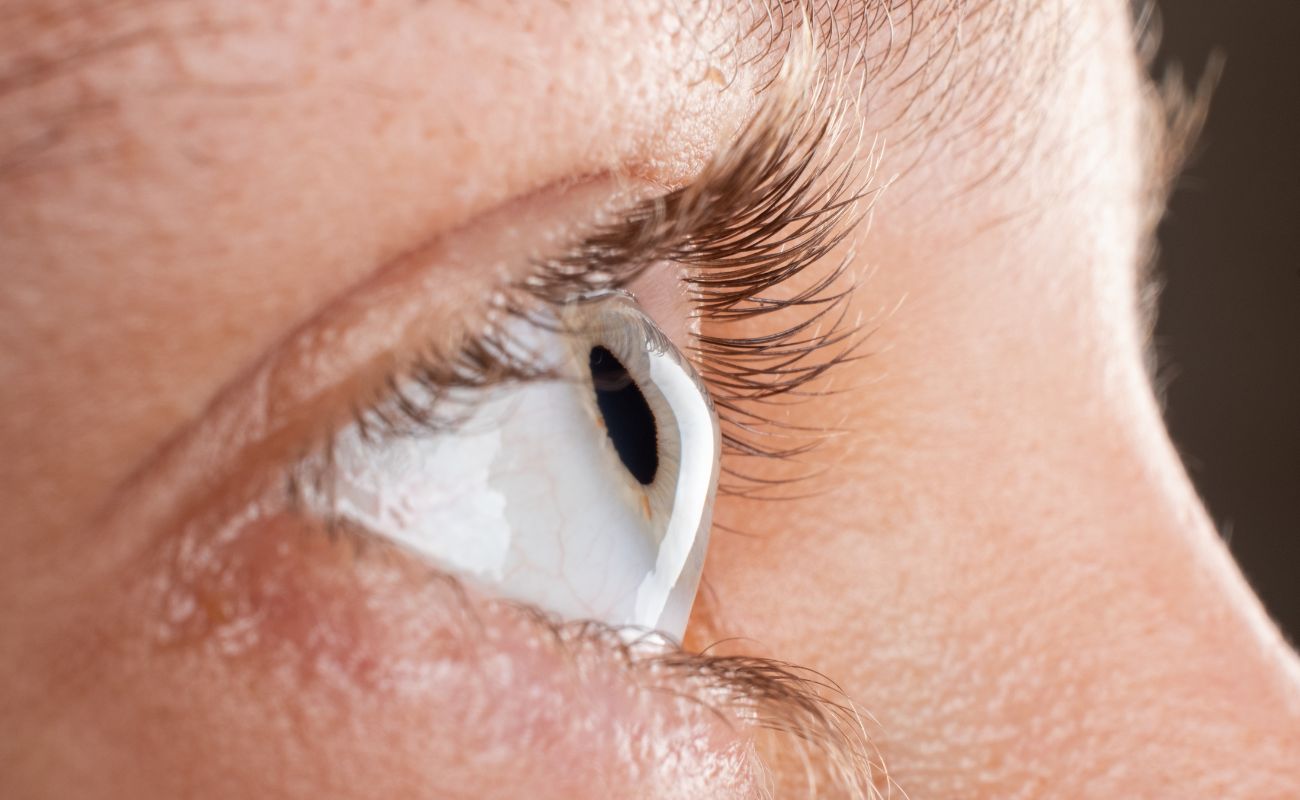

Astigmatism occurs when the cornea is shaped more like an oblong football than a spherical baseball. An astigmatic cornea has a steeper curve and a flatter one, causing light rays to focus on two points in the back of your eye, rather than on just one, causing blurred vision at all distances.
Until now, people with astigmatism have had only two choices for contact lens wear: “hard” or soft toric contact lenses. “Hard” lenses offer crisp, clear vision but are often irritating and uncomfortable. Soft toric lenses have a reputation for comfort but sometimes rotate, causing inconsistent vision.What are Soft Toric Contact Lenses?Most people with astigmatism cannot wear standard soft contact lenses, because standard, or spherical, soft lenses have the same power all around the lens. Toric lenses are made from the same material as soft contacts but are designed differently.Toric lenses have two powers in them, one for astigmatism, the other for either nearsightedness or farsightedness. To correct your vision, the two powers need to remain stable so toric lenses can’t rotate on your eye. To do this, they are designed so that the bottom portion of the lens is weighted slightly so the lens stays fairly stable when you blink or shift your gaze. However, most toric lens wearers still experience some lens rotation on blink or gaze shift, known as “toric lens rotation,” which results in temporarily blurred vision. This unstable vision can occur anytime and is often more noticeable in lower levels of illumination, such as driving at night.What are “Hard” or Gas Permeable (GP) Lenses?With “hard” lenses, or GPs, the lenses’ rigidity can help mask a need for an astigmatic correction: when GP lenses are placed on the astigmatic cornea the space between the back of the GP lens and the surface of the cornea is filled up by tears. This layer of tears functions to correct the astigmatism, so a GP contact lens needs to have only one power to correct any near or far sightedness.The downside to GP lenses is their less-than-optimal comfort due to the stiffness of the lens material. Rigid lens wearers also experience the irritation of debris collecting under the lens, and may dislodge during activity.