
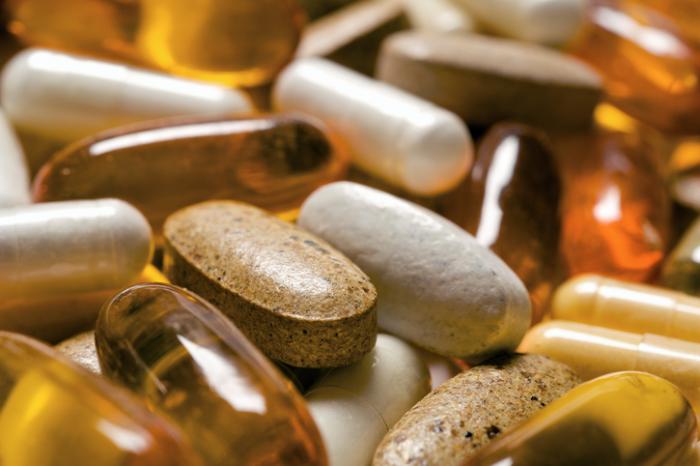
If you have dry eyes, you've probably seen recommendations for fish oil, omega-3s, vitamin D, vitamin A, or other supplements. But can taking a vitamin actually improve dry eye?
Sometimes; but it depends on why your eyes are dry in the first place.
Certain nutritional deficiencies can contribute to dry eye and ocular-surface problems. However, taking additional vitamins when you're already getting adequate amounts does not necessarily improve tear production or dry-eye symptoms.
Dry eye disease is multifactorial. It can involve meibomian gland dysfunction, inadequate tear production, inflammation, eyelid disease, medications, hormonal changes, environmental factors, autoimmune disease, and other conditions.
Nutrition can be one piece of the picture, but it shouldn't replace determining what's actually causing your symptoms.
Do Vitamins Actually Help Dry Eyes?
Vitamins are most likely to matter when someone has a true nutritional deficiency.
If you're already well nourished, there is limited evidence that simply adding vitamin supplements will significantly improve dry eye disease.
The best example is omega-3 fatty acids.
Omega-3s have been studied extensively because of their potential anti-inflammatory effects and possible role in meibomian gland and tear-film health. Some studies have reported benefits, while others have not.
One of the largest studies, the Dry Eye Assessment and Management (DREAM) trial, compared omega-3 supplementation with an olive-oil placebo. After one year, omega-3 supplementation did not provide significantly greater improvement in dry-eye symptoms than placebo.
That doesn't necessarily mean omega-3s never help anyone. It does mean that they shouldn't be presented as a proven or universally effective treatment for dry eye.
The same principle applies to other vitamins: biological plausibility or an association with dry eye does not necessarily mean that taking more of the nutrient will improve the disease.
Nutrients Commonly Discussed for Dry Eye
Omega-3 Fatty Acids
Omega-3 fatty acids are probably the best-known nutritional supplements associated with dry eye.
EPA and DHA are long-chain omega-3 fatty acids found primarily in fatty fish, including:
- Salmon
- Sardines
- Mackerel
- Herring
- Anchovies
- Tuna
Some research suggests omega-3 intake may influence inflammation or meibomian gland function, but studies of omega-3 supplements for dry eye have produced inconsistent results.
For that reason, omega-3 supplements should be viewed as a possible supportive measure rather than a primary treatment for dry eye disease.
Eating fish and other foods containing omega-3 fatty acids can still be part of a healthy, balanced diet regardless of whether supplementation improves dry-eye symptoms.
Vitamin D
Low vitamin D levels have been associated with dry-eye symptoms and altered tear function in some studies.
However, an association does not prove that low vitamin D causes dry eye, nor does it prove that taking vitamin D will improve dry eye in someone whose vitamin D level is already adequate.
If you have risk factors for vitamin D deficiency, your primary care physician may recommend checking your level with a blood test. If a true deficiency is present, correcting it is important for overall health and may potentially benefit ocular health as well.
Vitamin D should not be taken in excessive doses without medical guidance because very high levels can cause harmful elevations in blood calcium.
Vitamin A
Of all the vitamins discussed in relation to dry eye, vitamin A has one of the clearest relationships with ocular-surface health.
Vitamin A is essential for normal epithelial health and visual function. Significant vitamin A deficiency can cause severe dry eye, changes to the conjunctiva and cornea, and, in advanced cases, serious vision-threatening ocular-surface disease.
Fortunately, true vitamin A deficiency is uncommon in the United States. It is more likely in people with malnutrition, malabsorption disorders, certain gastrointestinal or bariatric surgeries, liver disease, or other medical conditions that interfere with nutrient absorption or storage.
Vitamin A supplementation should not be taken unnecessarily or in high doses. Because vitamin A is fat-soluble, excessive intake can accumulate in the body and cause toxicity.
If vitamin A deficiency is suspected, it should be medically evaluated rather than treated by simply starting a high-dose supplement.
Vitamin B12
Vitamin B12 is important for normal nerve function.
Some research has found associations between vitamin B12 deficiency, dry-eye symptoms, and ocular or neuropathic pain. Patients with ocular neuropathic pain may describe burning, stinging, sensitivity, or discomfort that can overlap significantly with symptoms of conventional dry eye disease.
However, the evidence does not support vitamin B12 as a routine dry-eye treatment.
If a patient has a documented B12 deficiency, correcting the deficiency is important for overall neurologic and systemic health. Whether doing so improves ocular symptoms depends on the individual patient and the cause of those symptoms.
Vitamin B12 is naturally found in animal products such as fish, meat, eggs, milk, yogurt, and cheese, and is also available in fortified foods.
Is Food Better Than Supplements for Eye Health?
For most people without a documented deficiency, the best nutritional strategy is a varied, balanced diet rather than taking multiple supplements specifically for dry eye.Foods provide nutrients within a much broader nutritional context, and getting a nutrient from food also reduces the risk of unintentionally taking excessive doses.
A diet that includes vegetables, fruits, whole grains, healthy fats, and sources of omega-3 fatty acids supports overall health as well as ocular health. Supplements can be useful when a deficiency has been identified or when a physician recommends them for another medical reason. But more isn't necessarily better.
Fat-soluble vitamins in particular can accumulate in the body, and supplements can interact with medications or other medical conditions.
Why Vitamins May Not Fix Your Dry Eye
If you've been taking supplements and your eyes are still burning, gritty, watery, or uncomfortable, the problem may have very little to do with nutrition.
For example, a supplement cannot mechanically open an obstructed meibomian gland. It cannot correct incomplete blinking or prevent air conditioning from accelerating tear evaporation. And it may not adequately treat significant ocular-surface inflammation or aqueous deficiency.
That's why determining the mechanism of your dry eye matters.
If meibomian gland dysfunction is contributing to evaporative dry eye, treatment may include warm compresses, eyelid care, prescription medication, or in-office procedures such as IPL, TearCare, LipiFlow, or radiofrequency treatment.
If inflammation is an important component, prescription anti-inflammatory medications may be appropriate.
Patients with inadequate tear production may benefit from treatments designed to increase or conserve their natural tears, including Tyrvaya, LacriFill, or punctal occlusion when appropriate. Other patients may benefit from MIEBO to reduce tear evaporation.
For significant ocular-surface disease, biologic treatments such as autologous serum or platelet-derived growth factor preparations may be considered.And for patients who need continuous hydration and protection of the ocular surface, customized scleral lenses can maintain a reservoir of preservative-free saline over the cornea while the lenses are worn.
The appropriate treatment depends on what is actually causing the tear film to fail.
How Miami Contact Lens Institute Can Help
Nutrition is important for your overall health, including your eyes. But persistent dry eye usually isn't solved by finding the right vitamin. At Miami Contact Lens Institute, we evaluate the tear film, meibomian glands, eyelids, cornea, and ocular surface to determine what's contributing to each patient's symptoms.
Treatment is then directed at the underlying problem and may include prescription medications, IPL, radiofrequency treatment, TearCare, LipiFlow, LacriFill, biologic therapies, or specialty scleral lenses when appropriate.If you've been trying artificial tears or supplements without lasting relief, the next step is determining why your eyes are dry rather than continuing to add treatments without a diagnosis.
Contact Miami Contact Lens Institute to schedule a comprehensive dry eye evaluation. Patients closer to Broward County can also be seen at our Weston office.