

Myopia, commonly known as nearsightedness, is becoming increasingly prevalent among children worldwide. While glasses and conventional contact lenses can correct blurry distance vision, they do not necessarily address the underlying progression of myopia, which is often associated with excessive elongation of the eye.
Childhood myopia is particularly important to monitor because progression can continue throughout the school-age years and into early adulthood. As myopia increases, so does the lifetime risk of certain ocular complications, including retinal detachment, myopic maculopathy, glaucoma, and other conditions associated with high myopia. Fortunately, modern myopia management offers several treatment options designed to slow progression rather than simply correct blurry vision. Two commonly used approaches are MiSight 1 day contact lenses and orthokeratology, also known as Ortho-K.
Although both treatments can help slow myopia progression, they work differently and offer distinct advantages. Understanding these differences can help parents make informed decisions about their child's vision and long-term eye health.
What Are MiSight Contact Lenses?
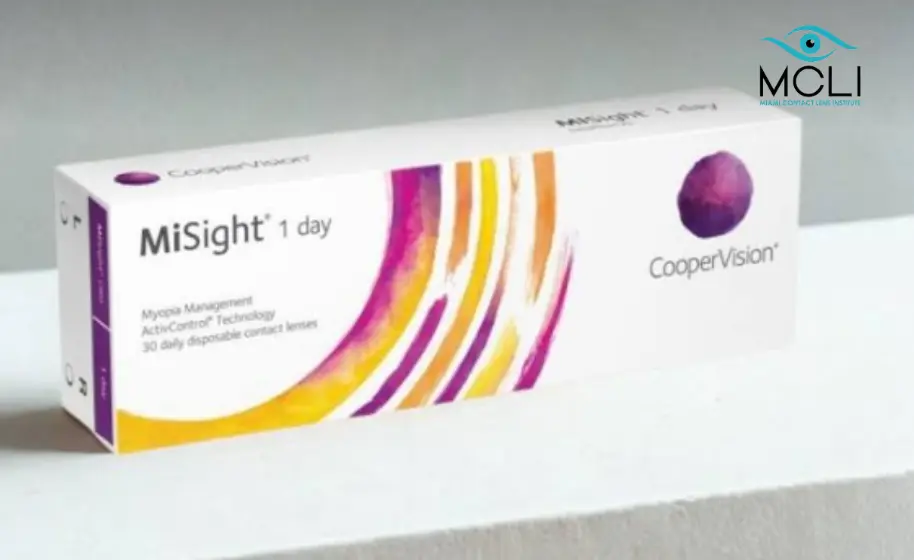
MiSight 1 day lenses, developed by CooperVision, are daily disposable soft contact lenses specifically designed to correct nearsightedness while slowing myopia progression in children. Unlike conventional single-vision contact lenses, MiSight lenses incorporate a dual-focus optical design. The central correction zones provide clear distance vision, while alternating treatment zones create myopic defocus on the retina. This optical signal is intended to help reduce the stimulus for excessive axial elongation, one of the primary structural changes associated with myopia progression.
MiSight 1 day was the first soft contact lens approved by the U.S. Food and Drug Administration (FDA) for slowing myopia progression in children. Its FDA-approved indication includes children who begin treatment between 8 and 12 years of age, with a spherical equivalent refractive error between -0.75 and -4.00 diopters and 0.75 diopters or less of astigmatism. Clinical research has demonstrated meaningful reductions in myopia progression and axial elongation with consistent MiSight wear. In a three-year randomized clinical trial, children wearing MiSight lenses experienced approximately 59% less myopia progression and 52% less axial elongation than children wearing conventional single-vision contact lenses.
Benefits of MiSight Lenses
One of the greatest advantages of MiSight is its simplicity. Because the lenses are daily disposables, children insert a fresh pair each morning and discard them after removal at night. There is no need for cleaning solutions, storage cases, or overnight disinfection, making them an appealing option for families who prefer a straightforward contact lens routine. MiSight lenses also provide clear distance vision during wear, allowing children to participate in school, sports, and everyday activities without glasses. Their soft lens material may be easier for some children to adapt to than rigid contact lenses, although proper insertion and removal training remains essential.
However, MiSight is available in a limited range of parameters and does not offer a toric design for correcting significant astigmatism. Children with higher prescriptions, substantial astigmatism, or certain corneal characteristics may therefore be better candidates for alternative myopia management treatments.
What Is Orthokeratology (Ortho-K)?
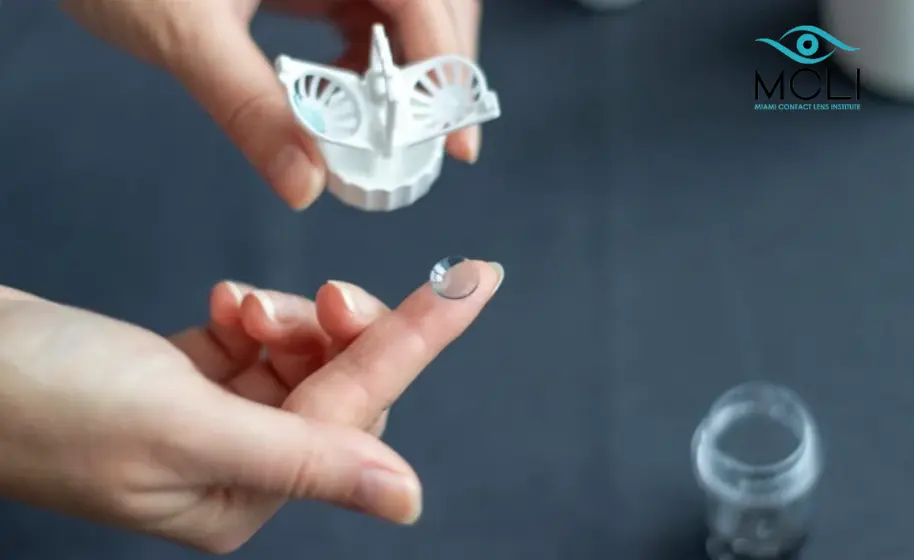
Orthokeratology, commonly called Ortho-K, uses specially designed rigid gas-permeable contact lenses worn during sleep to temporarily reshape the cornea. By modifying the curvature of the central corneal epithelium, these lenses reduce the eye's refractive error, allowing many patients to see clearly during the day without glasses or contact lenses. Unlike conventional daytime contact lenses, Ortho-K lenses are inserted before bedtime and removed upon waking. The corneal reshaping effect is temporary, so consistent overnight wear is generally necessary to maintain clear daytime vision.
Beyond refractive correction, research has demonstrated that orthokeratology can slow axial elongation in children with myopia. Although the exact mechanisms are still being investigated, the treatment is thought to influence retinal defocus patterns in a way that helps regulate eye growth. In the United States, overnight orthokeratology lenses are FDA-cleared for temporary reduction of refractive error. Their use specifically to slow myopia progression is generally considered off-label, although it is supported by a substantial body of clinical research.
Benefits of Ortho-K Lenses
One of the most appealing benefits of Ortho-K is the freedom it provides during the day. Because the lenses are worn overnight, many children can attend school, play sports, swim, and participate in other activities without needing daytime glasses or contact lenses. Ortho-K lenses are also custom-designed for each patient's corneal shape and prescription. Depending on the lens design and individual anatomy, orthokeratology may be suitable for a broader range of refractive errors than MiSight, including certain degrees of astigmatism and higher myopia. For children who are highly active or prefer not to wear contact lenses during the day, Ortho-K can be particularly convenient. However, it requires a more involved fitting process, consistent overnight wear, careful cleaning and disinfection, and regular professional monitoring.
Because Ortho-K involves sleeping in contact lenses, appropriate hygiene and follow-up are especially important. Overnight contact lens wear carries a risk of microbial keratitis, and families must understand the importance of proper handling, avoiding water exposure, and recognizing early warning signs of complications.
MiSight vs. Ortho-K: Key Differences
Both MiSight and Ortho-K are effective myopia management options, but they differ in how they correct vision, how they are worn, and the responsibilities involved in maintaining treatment.
How Do MiSight and Ortho-K Work Differently?
MiSight and Ortho-K both aim to slow excessive axial elongation, but they accomplish this through different optical approaches. MiSight uses a dual-focus soft contact lens that provides simultaneous vision correction and myopic defocus during daytime wear. The treatment effect occurs while the lenses are on the eyes, and the lenses do not intentionally reshape the cornea. Ortho-K, by contrast, temporarily changes the shape of the corneal epithelium during overnight wear. This reshaping corrects the refractive error and alters the eye's optical profile, allowing children to experience clear daytime vision without corrective lenses while also providing a myopia-control effect.
Neither treatment permanently changes the underlying tendency toward myopia progression, and neither guarantees that eye growth will stop completely.
Which Treatment Is More Effective?
Both MiSight and Ortho-K have demonstrated clinically meaningful reductions in myopia progression, although their results should not be compared solely by looking at percentages from different studies.
In the landmark three-year MiSight clinical trial, children experienced approximately 59% less refractive progression and 52% less axial elongation compared with those wearing single-vision contact lenses. Research on orthokeratology has also shown significant reductions in axial elongation. A 2023 systematic review and meta-analysis reported that Ortho-K reduced axial elongation compared with control treatments, with differences of approximately 0.16 mm after one year and 0.28 mm after two years. These findings support both treatments as effective options for myopia management. However, differences in study populations, baseline prescriptions, treatment duration, and control groups make direct comparisons difficult.
For an individual child, treatment effectiveness may also depend on age, baseline myopia, axial length, adherence, and other clinical factors. Regular monitoring helps determine whether the chosen treatment is producing an appropriate response.
Which Option Is Safer?
Both MiSight and Ortho-K can be used safely in appropriately selected children when lenses are properly fitted and recommended hygiene practices are followed. However, all contact lens wear carries some risk of complications, including infection. MiSight's daily disposable design eliminates the need for lens cleaning and storage, reducing opportunities for contamination associated with reusable lens care systems. Because MiSight lenses are removed before sleep, they also avoid the additional risks associated with overnight lens wear. Ortho-K requires greater attention to hygiene because the lenses are reused and worn during sleep. Although serious complications are uncommon with appropriate care, overnight lens wear is associated with an increased risk of microbial keratitis compared with daily-wear lens modalities.
For either treatment, children should never expose their lenses to tap water, reuse inappropriate solutions, or continue wearing lenses when experiencing redness, pain, light sensitivity, or unexplained blurred vision. A child's ability to follow instructions consistently, with parental supervision when needed, is an important factor in determining which treatment is most appropriate.
How Do the Costs Compare?
MiSight and Ortho-K have different cost structures, making it important to consider the total expense of treatment rather than the initial fitting fee alone. MiSight typically involves an initial fitting and an ongoing supply of daily disposable lenses, along with periodic examinations to monitor vision, ocular health, and myopia progression. Because the lenses are replaced daily, families should account for the recurring cost of lens supplies.
Ortho-K generally requires a higher initial investment because the lenses are individually designed and the fitting process often involves additional diagnostic measurements and follow-up visits. However, the lenses are reusable and may last considerably longer than daily disposable lenses when properly maintained.Additional expenses may include replacement lenses, cleaning solutions, and ongoing monitoring. Insurance coverage varies, and many myopia management services are not covered under routine vision benefits.
At Miami Contact Lens Institute, we review the recommended treatment plan and associated costs during the consultation so families can make an informed decision.
Which Treatment Is Easier for Children to Manage?
MiSight is often appealing to families who want a simple daily routine. Children insert the lenses in the morning, wear them throughout the day, and discard them at night. There is no lens case to maintain or disinfecting solution to manage. Ortho-K requires a more structured routine involving lens insertion before bedtime, removal in the morning, and appropriate cleaning and storage. Younger children may need assistance or supervision from a parent, particularly during the initial adjustment period.
Some children find it easier to wear soft lenses during the day, while others prefer the convenience of waking up with clear vision and not having to think about contact lenses during school or sports. Neither approach is universally easier. The best choice is the one that the child and family can follow consistently and safely.
How to Choose the Right Myopia Management Treatment for Your Child
Choosing between MiSight and Ortho-K involves more than comparing convenience or clinical trial results. A comprehensive myopia management evaluation helps determine which option is most appropriate for your child's eyes, lifestyle, and long-term visual needs. Several factors influence the decision, including the degree of myopia, amount of astigmatism, corneal shape, age, ocular surface health, and rate of progression. The child's comfort with contact lens handling and the family's ability to maintain the recommended treatment routine are equally important.
For a child with low to moderate myopia, minimal astigmatism, and a preference for daily disposable lenses, MiSight may be an excellent option. For a child who participates in sports, prefers freedom from daytime correction, or has refractive characteristics that make MiSight less suitable, Ortho-K may offer important advantages. It's also important to recognize that myopia management is not limited to these two treatments. Depending on the clinical findings, other options, including low-dose atropine or alternative myopia-control optical designs, may be considered.
The goal is to select a treatment that provides clear vision while helping reduce the rate of myopia progression over time.
Why Early Myopia Management Matters
Myopia often progresses most rapidly during childhood, particularly in younger patients whose eyes are still growing. Children who develop myopia at an earlier age may have more years of progression ahead of them, increasing the likelihood of developing higher levels of myopia. Higher myopia is associated with an increased lifetime risk of retinal detachment, myopic maculopathy, glaucoma, and other vision-threatening conditions. Although myopia management cannot eliminate these risks, slowing axial elongation may help reduce the likelihood of developing high myopia and its associated complications.
Early detection and regular monitoring are therefore essential. Comprehensive eye examinations, cycloplegic refraction when appropriate, corneal evaluation, and axial length measurements can help assess progression and guide treatment decisions. Importantly, successful myopia management is not simply about maintaining a stable glasses prescription. Monitoring axial elongation provides additional information about the structural growth of the eye and can help evaluate how well treatment is working.
MiSight and Ortho-K at Miami Contact Lens Institute
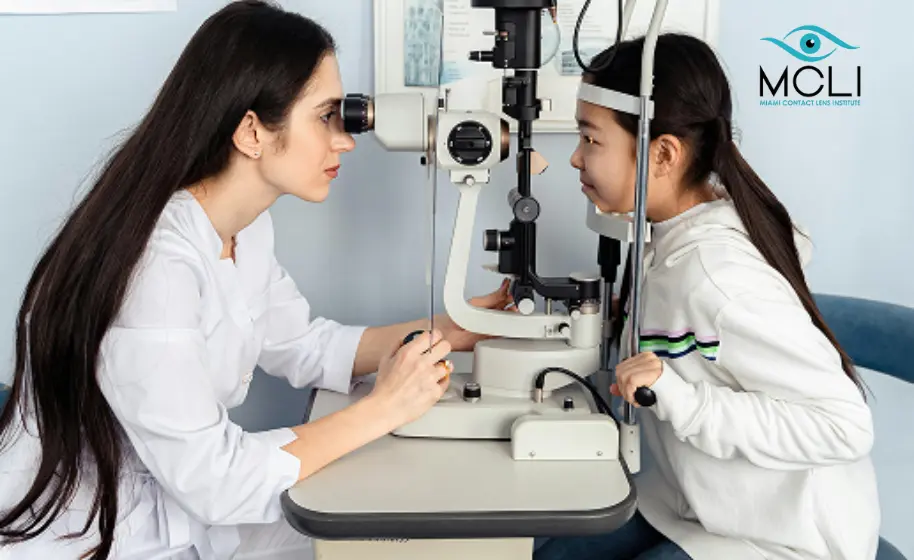
At Miami Contact Lens Institute, we take an individualized approach to childhood myopia management. Rather than recommending one treatment for every child, we evaluate each patient's refractive error, corneal anatomy, ocular health, lifestyle, and risk of progression before developing a treatment plan. Dr. Elise Kramer, OD, FAAO, FSLS, FBCLA, specializes in specialty contact lenses and myopia management, including MiSight daily disposable lenses and customized orthokeratology designs. Our practice uses advanced diagnostic technology to assess corneal shape and monitor changes in vision and ocular growth over time.
We also provide comprehensive instruction for children and parents, ensuring that families understand the benefits, limitations, and responsibilities associated with each treatment. Regular follow-up appointments allow us to evaluate treatment response, monitor ocular health, and make adjustments when necessary. Whether your child has recently been diagnosed with myopia or has experienced continued prescription changes, early evaluation can help determine whether myopia management is appropriate.
Contact Miami Contact Lens Institute to schedule a pediatric myopia management consultation and explore whether MiSight, Ortho-K, or another treatment option may be best suited to your child's needs.